


Spoilers for season 3, episode 9.
Quick: who’s the bad guy on season 3 of Ted Lasso? Not “a” bad guy, but “the” bad guy? Not to name-drop ourselves too much, but who exactly is the antagonist? Who is the, or even a, central figure who is actively working to prevent Ted Lasso from achieving his goals? Who’s creating the conflict? Let’s go to the usual suspects.
Rupert

Rupert is the best example of a bad guy, not a Bad Guy. He sucks. He’s terrible to the women in his life, and an intentionally bad influence on Nate. He encourages all of the worst tendencies among the men on his team and cheats on his wife with his assistant. He also hasn’t had any meaningful impact on the series since his pregnancy announcement helped Rebecca work up the nerve to confess to Ted back in season 1 episode 9 “All Apologies.” And he hasn’t interacted with anyone from Richmond since episode 4 of this season when West Ham trounced them. His actions don’t drive the plot, he mostly just sucks. He’s a side dick.
Nate

Nate had serious potential at being the antagonist since he literally competes with the show’s protagonist, but instead, he’s hitting on the hostess at his favorite restaurant. We’ve seen Nate, the manager for the team that’s one of the biggest rivals to the Greyhounds, coach exactly one time. He told a player to stand on the dumb-dumb line, and ever since he’s been working out his weird incel-vibe daddy issues. Nate’s biggest conflict is not remembering that he could just text Ted if he wanted to apologize.
Jack

Jack is not an antagonist. She’s barely a character. She’s mostly a walking example of what not to do: don’t date the person whose business you’re funding, don’t love bomb, don’t ask your girlfriend/investee to release a humiliating statement after she’s been the victim of a sex crime, don’t ghost said girlfriend/investee. Note: the above restrictions are not applicable to the unethically wealthy even though they’re literally the only ones who need said restrictions.
Roy

Roy isn’t a bad guy, but he’s sure being a jackass. You’re gonna ask Keeley *that* question and then be a dick to Keeley’s best friend who is also your boss? Also, where did this whole “Roy doesn’t think he’s worthy of good things so he runs away from them” thing come from? Since when has he thought that? The guy who told Rebecca she deserves to feel like she’s been struck by fucking lightning needs Rebecca to now tell him he deserves good things? What is this plotline’s purpose and to what end? And also, like, the fuck?
Isaac

No. It’s not Isaac. “La Locker Room aux Folles” saw a misunderstanding between friends who deeply care about each other. That’s, at most, a good reason to schedule check-ins with your bestie.
The Racists Who Trashed Ola’s
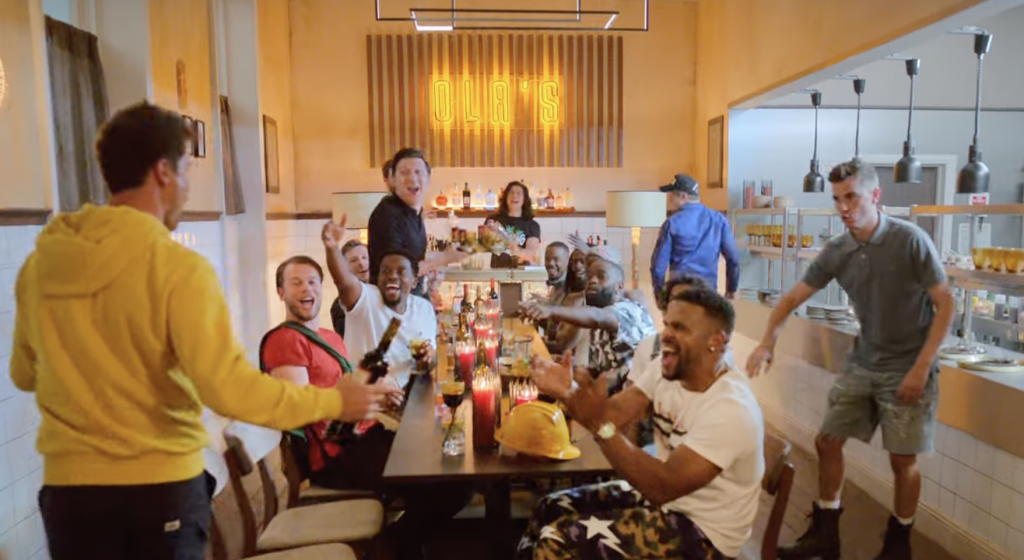
These are not the racists obviously, but that’s because the show didn’t bother to actually deal with the racists. They were introduced, overcome, and dismissed. Much like the homophobe/homophobia depicted in episode 9. Because the way to defeat systemic injustice is to say “Oh that’s really bad,” and then ignore it.
Self-Doubt
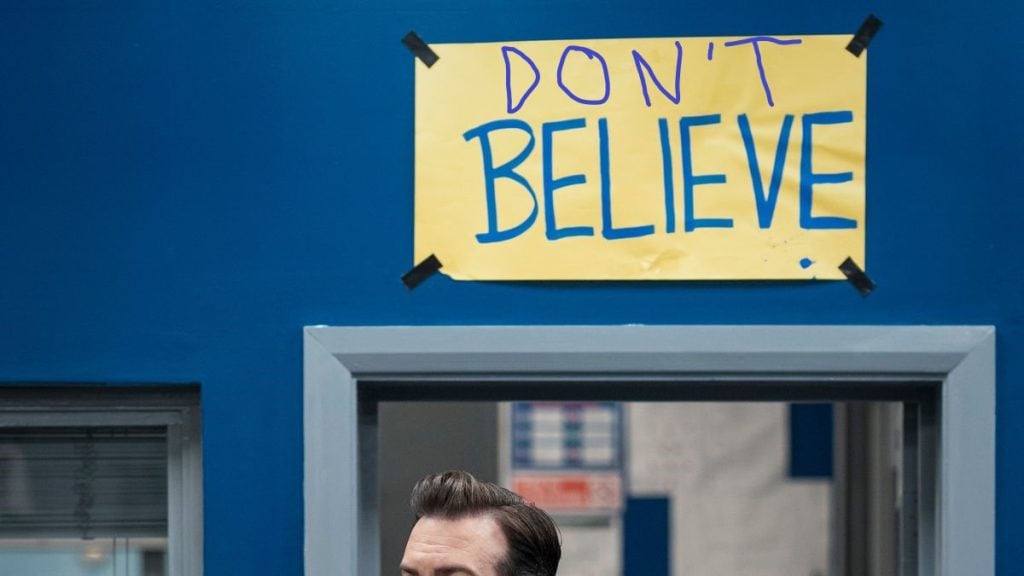
Ok, so here’s the thing: Self-doubt is an amazing tool for giving characters the motivation to make big mistakes and a terrible thing to have as a boogeyman. It isn’t really the thing characters overcome, it’s the thing that puts them into situations they need to overcome in order to achieve their goals. The mistakes, the conflict, the resolution. All of these things are supposed to be actively undertaken by the protagonist. Instead, we’re just getting a repeated line to believe in yourself, and nice is better than mean.
That’s not a story.
Is it nice? Sure. Fuck nice. “Nice” is what you get when someone isn’t actively being mean. It’s a lack of action and a lack of conflict. It’s the opposite of storytelling.
What this show needs isn’t meanness necessarily, but it does need a single person who is actively preventing the protagonist from achieving their goals. It needs an inkling of conflict. It needs someone to be trying to do something instead of randomly bumping into problems that stop being problems by the next episode. It needs one giant turd in the punchbowl to actually make everyone think, “holy shit, we’ve got a turd in the punchbowl, we need to fix this.”
It needs someone to win over with kindness, not just kindness hanging out in the AFC Richmond locker room.


