


1. You can watch Netflix’s Kaleidoscope in any order you want, the same way you can watch any show in any order you want. Kaleidoscope doesn’t use any narrative devices or gimmicks; it doesn’t play with perspective; it doesn’t employ any unusual or intriguing plot devices to make rewatching the episodes in a different sequence a revealing and rewarding experience. It is a straightforward story, told straightforwardly. The pseudo-choose-your-own-adventure aspect is a marketing trick, skillfully played.
2. There are no kaleidoscopes, literal or metaphorical, in Kaleidoscope.
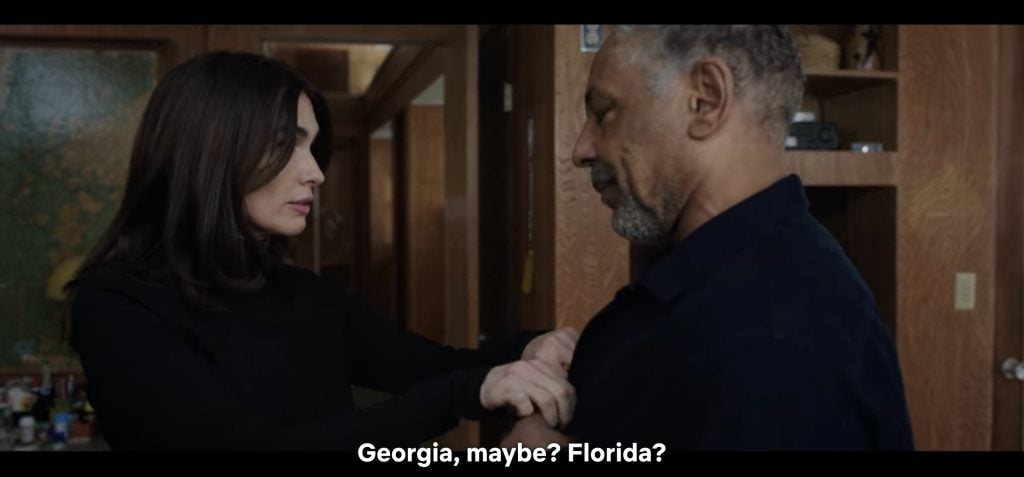
3. The moment in “Blue” when RJ reaches out to Judy for an unexpected hug after Judy gives him the gun he asked for is the strangest and most quietly human moment in the entire series.
4. Except, perhaps, for this one.

5. You can watch Kaleidoscope in any order, but don’t watch “Violet” first. It is the first episode chronologically, but it’s the heaviest episode emotionally. (This observation presumes that you do not enjoy watching a woman burn to death.)
6. You can watch Kaleidoscope in any order, but you probably shouldn’t want to watch “Green” first. There is a prison break, which is heist-adjacent, but it’s the least heist-y episode and the heaviest in terms of grotesque physical harm. (There are things in narrative more brutal than murder.)
7. Netflix seems to want its audience to watch Kaleidoscope starting with “Yellow,” which is the “putting-the-crew-together” episode. Which makes sense on one level – “Yellow” is the bounciest, most fun Kaleidoscope episode; if you don’t know what happened 24 and eight years before the heist and simply start six weeks before, you will free your mind from worry about dead wives and rolling pin-beaten faces.
8. If you want a disjointed narrative experience, you might try an encyclopedic metaphor instead.
9. The best heist stories spend enough of their focus on the step-by-step craftsmanship of the heist for the audience to think they understand what’s going to happen. Then, when things inevitably go awry, we can be delighted by the crew’s improvisational gifts – then delighted again when the rest of the curtain gets pulled back for us to see the remaining mystery mechanisms without which the heist never would have worked.
10. Kaleidoscope spends more time on backstory than craftsmanship; more time on character motivation than character; more time on conflict than on detail; more time on curtain-pulling than stagecraft.
11. Watching Kaleidoscope, I can’t help but think of Joel Coen’s recently unearthed observation that too many contemporary TV shows have “a beginning, a middle, a middle, a middle, until the whole thing dies of exhaustion.” Although, given the show’s marketing trick, it might be more accurate to say that Kaleidoscope has a beginning, a beginning, a beginning, a beginning, and then a solitary crux followed by heat death.
12. No one in this crew seems to have sufficient appreciation for what a billion dollars might mean for them, personally.
13. No child in the history of sweet treats has ever said this sentence:

14. If you start playing Act II of Hamilton at the exact moment you hit play on “White” – aka “The Heist Episode” – the song “Hurricane” will start playing the instant Hannah hits Carlos over the head with a fire extinguisher to save her father’s life.
15. “White” is probably Kaleidoscope‘s best individual episode, in part because it has the least amount of dialogue. If you watch the episodes in chronological order, you will, by the time you reach “White,” doubt very strongly that these characters are capable of exerting self-control sufficient to silence them for any appreciable length of time. However, in the way of a parent exhaling when their small child has at long last drifted off to sleep, you will by this point simply relish the calm.
16. If there is any justice in the world, one positive result of Kaleidoscope‘s apparent enormous popularity will be a proportional rise in the popularity of this meme, along with this one and this one.
17. If I were a master criminal putting together a crack team for the purpose of stealing $7 billion in untraceable paper bonds and my demolition expert of choice had a hothead safecracking boyfriend who threatened me in order to become a part of my crack team, I would simply turn to my second demolition expert of choice.
18. The mall safe in Bad Santa was harder to crack than Roger Salas’ master safe in Kaleidoscope.
19. None of the criminals in Kaleidoscope seem particularly seasoned. Even master thief Ray Vernon alias Leo Pap, who sometimes suffers from Parkinson’s Disease, did most of his master thieving a generation before Kaleidoscope takes place. Perhaps it would have been a wise move for the team to congeal by committing some light burglaries and low-level heists before tackling “the most secure vault on the East Coast.” Or, as another guy from another show once put it,
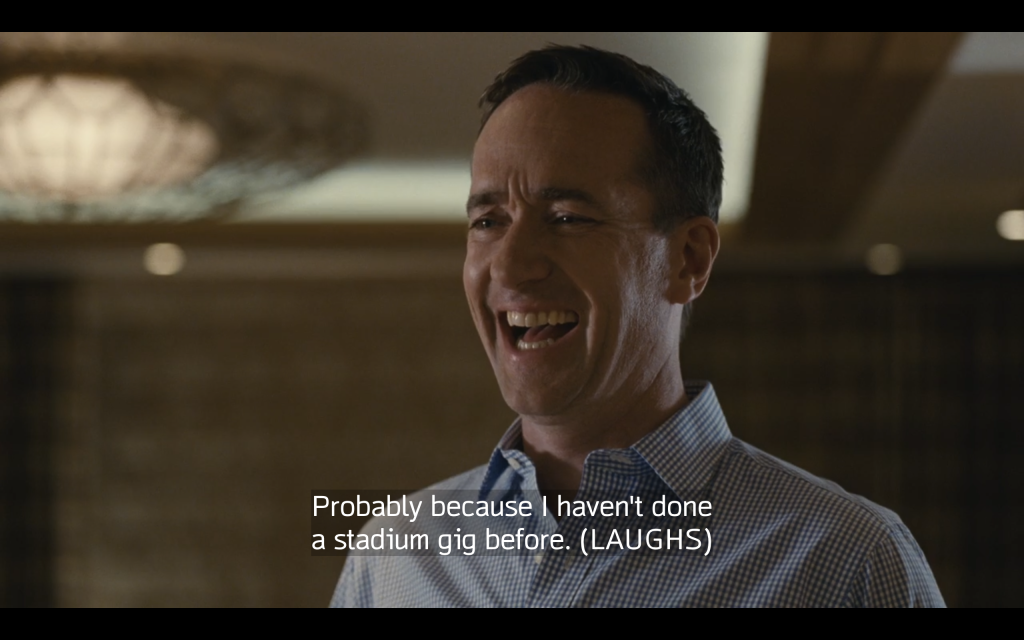
20. 24 years is a long, long time. Perhaps Ray Vernon spent some of those years – the majority of which he spent in prison – wondering whether he was in any way to blame for his wife’s death. Or whether revenge was a sensible thing around which to base the remainder of his life. Or whether he might spend some of his remaining time in living tribute to his wife’s memory.
21. Are there film genres other than horror movies, other than monster movies, in which the villain comes back to life? Inexplicably and impossibly?
22. Without question, Bob is a bully, a shit, a mediocre criminal at best. He is abusive without charm; he is impulsive without talent; he is scruffy and lumpy without roguishness or ease. But is he a monster? And is he enough of a narrative presence to qualify as a villain?
23. Does Kaleidoscope want to be a monster movie, too?
24. Does Kaleidoscope want to be The After Party?
25. Are these waterproof, though?
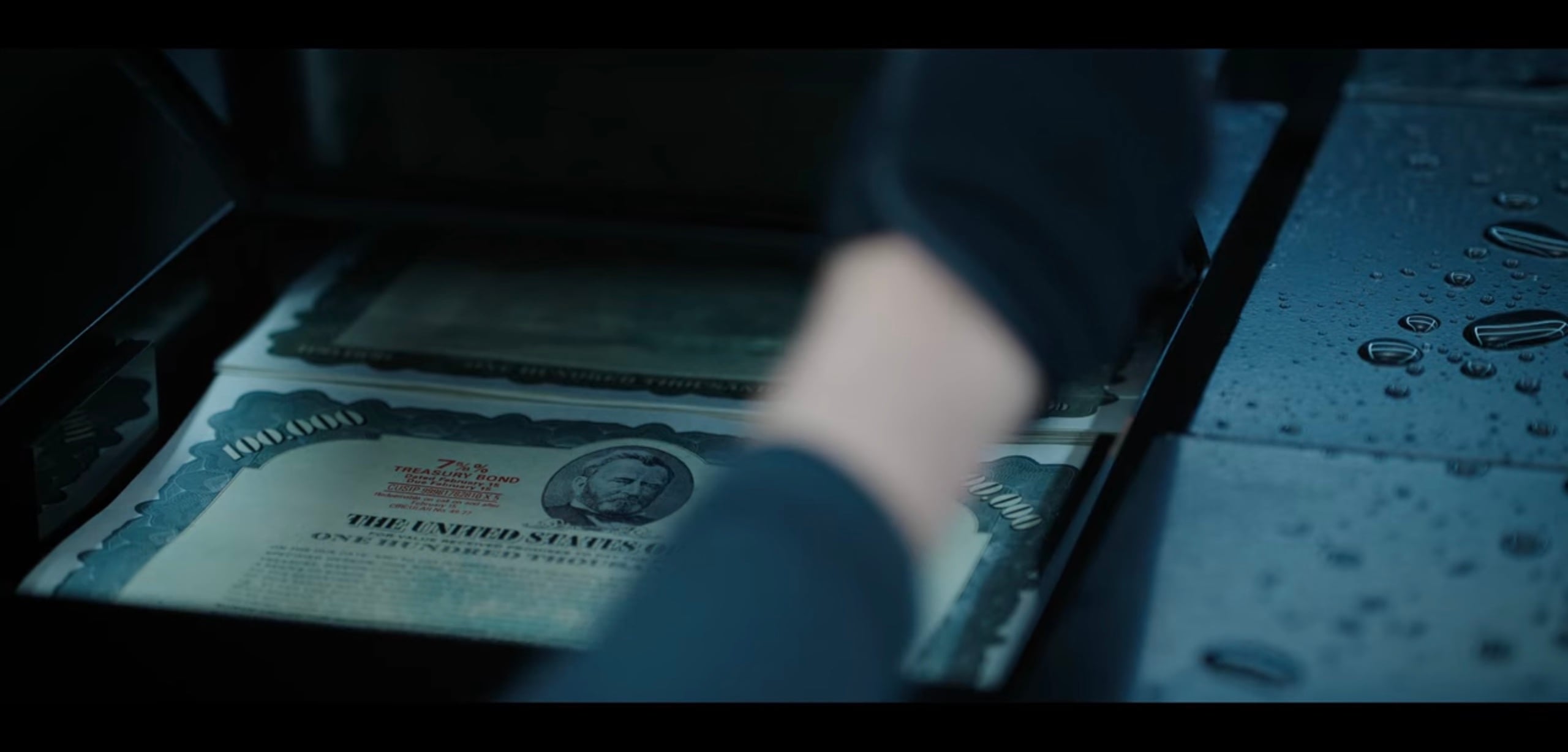
26. In thieves’ jargon, is the difference between a mole and a rat just a matter of perspective?
27. As soon as the heist is over, the hurricane ends, too.
28. Placing a badly estranged father-daughter relationship at the center of your heist show’s beating heart and then sacrificing all development of that relationship in service of the heist itself while simultaneously trying to justify an eight-episode arc by banking on an audience’s investment in your characters’ relationships is a choice.
29. When Hannah tells her father that she’s “done trying to change [him],” it’s easy to forget that she has been in contact with him for longer than the six weeks that have elapsed since “Yellow,” and that she did in fact reconnect with him seven years ago, after he broke out of prison in “Green.”
30. It’s easy to forget that Hannah and Ray have been back in touch with each other for seven years and not just six weeks because Kaleidoscope doesn’t show us any of the heartbreak and frustration Hannah (presumably) suffered trying to change her father’s criminal ways. But the show does tell us that Hannah suffered.
31. It appears to be rather easy to dupe the FBI.
32. Kaleibeescope.
33. If I were a master criminal putting together a crack team for the purpose of stealing $7 billion in untraceable paper bonds and my demolition expert’s hothead safecracking boyfriend, who threatened me in order to become a part of my crack team in the first place, got shot in the hand during a pre-heist seed money heist because hubris led him to steal something my crack team didn’t need, and his shot-up hand rendered his already questionable safecracking skills effectively non-existent, I would simply remove him from my team and turn to my second safecracker of choice.
34. Ray Vernon is perhaps not as introspective as he thinks he is.
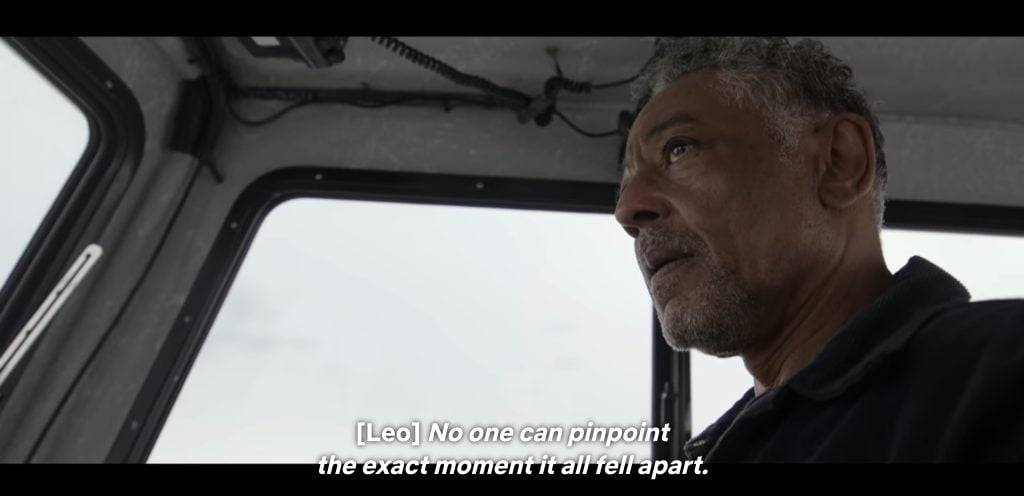
35. It appears to be rather easy to move around New York City during a hurricane.
36. In Roger Salas’ henchman Carlos, Kaleidoscope could have had a Luca Brasi (or, at the very least, Colin from Succession). Instead, the show used him for set dressing, then dumped him in a piece of waterlogged office furniture. Carlos is the fishes Luca Brasi sleeps with.
37. One wonders why a former nonviolent thief and current fradulent vault manager like Roger Salas would need a violent fish-sleeper such as Carlos in the first place – to say nothing of all the men at Carlos’ disposal, who, together, will help “Carlos…do what Carlos does.”
38. By the events of “Red,” I was hoping for a subplot in which we found out how exactly one pumps hundreds of thousands of gallons of hurricane water out of a top secret impregnable subbasement vault with a hole in its roof and back into the sea whence most of it came.
39. I was also hoping for an entire Kaleidoscope episode devoted to Stan, his wife, and his mother bickering at each other. Bickering over breakfast; sniping as they stock the counter before opening the store for the day; sparring as they cross back and forth along the cramped hallways between the store and their home; quibbling and quarreling as they prepare for the hurricane, choose whether to evacuate, load their beater of a car. Grandkids and missed opportunities for them. College degree programs unmatriculated. The hot and the stink of the city in late summer; the impossibility of a long-cherished dream now clutched to the chest with both hands like the last morsel of food on the last day on earth. Give me that episode; ground me like electricity.
40. The FBI, as we all know, has one telephone number.
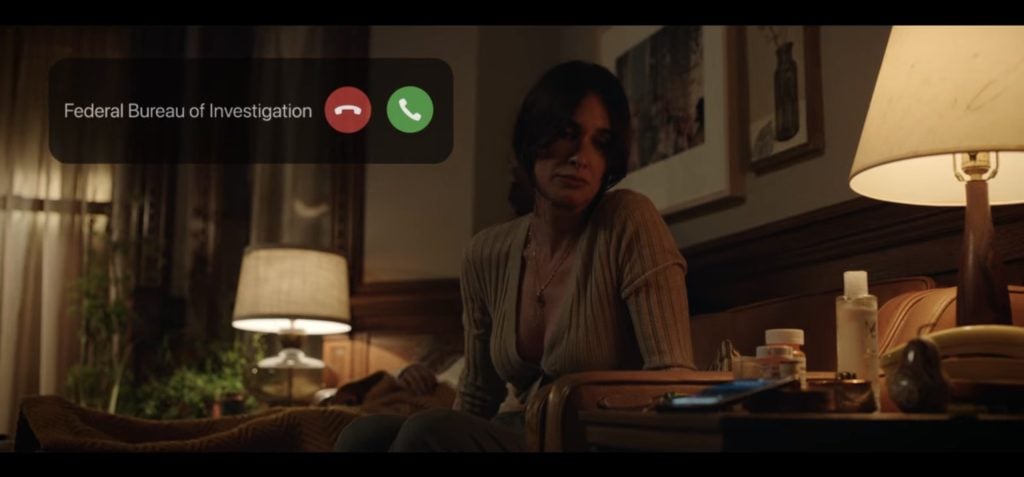
41. The jazzy, 50s-tinged Kaleidoscope OST doesn’t bop quite as high once the show tallies a body count.
42. One does wonder about the selective destruction of a hurricane that can wreak untold devastation upon New York City but leave the getaway boat and its getaway dock not only undamaged but completely unscathed.
43. Judy’s broken-winged butterfly bracelet is a metaphor for love – how we’ll do anything for what we think love is supposed to be. Even if anything is something that hurts the one we think we love.
44. Ava Mercer is supposed to be a lawyer, but we never see her practice. Given her talent for dickering and deception, this feels like a missed opportunity. As Better Call Saul taught us over and over again, there are few things more thrilling than a lawyer running a scam.
45. How does Roger, who lost “everything” when the FBI discovered his true identity and who is serving 20 years for grand larceny and assorted other charges, have $20,000 to give to voiceless Bob to get revenge on the rest of the crew?
46. Judy’s broken-winged butterfly bracelet is a metaphor for trust – how in the end even those in whom we place our trust are as likely to betray us for well-meaning reasons as for selfish ones. The only people we can really trust…are ourselves.
47. The miracle of diversity that is Bob’s tracksuit wardrobe.
48. Their weight in fool’s gold to the intrepid blogger who solves the mystery of which HGTV show and episode Ray is watching at his home in Ohio.
49. Stan calling Ray from a place called Folly Beach is so on the nose it honks.
50. Judy’s broken-winged butterfly bracelet is a metaphor for greed – because what are we, ultimately, but our basest impulses and the weak structures we build around them to try to save us from ourselves? What is a human being if not an extra spoonful of ice cream, a kiss with the wrong person in the wrong darkened doorway, a bullet through a shatterproof glass window for a piece of jewelry we’re convinced both by and in the heat of the moment that we, having seen it, could never do without?
51. Resist this temptation.
52. The wine case scam Judy and Stan run on Dicky Minibar is likewise straight out of the Better Call Saul playbook (shoutout to Marco).
53. Write your own heist narrative. Fill it with flashy details of thievery. Fill it with pithy statements of a hard life and hard lessons learned. Take as your modus operandi Judy’s exhausted Folly Beach declaration: “I don’t know the first thing about how to steal a quarter-million dollars.”
54. Consider whether “Can you manipulate them better than they manipulate you” is too gymnastic an M.O. for your narrative skills or whether it’s too broad without depth.
55. Consider whether Bob could have been a more compelling character if he were unable to speak from the very beginning.
56. The two morons Bob hires to back him up on his grimfaced revenge quest somehow manage to be Kaleidoscope‘s two most sensible characters.

57. This does nothing to change the fact that they remain, indelibly, morons.
58. A roll of paper towels is an excellent place to hide a silenced pistol.
59. If the storyline about an FBI agent’s custody battle goes more than half of your limited series’ running time without mention of her child, and if you reach the final episode and there’s still no mention of her child; her former partner; the judge in her case; the possibility of custody; the possibility of reconciliation, is it safe to assume that the FBI agent has begun using drugs again?
60. Is it safe to assume her drug use even if we haven’t seen or heard anything about it since before the last time we heard about her child?
61. At what point is a neglected narrative a deliberate artistic choice and at what point is it just oversight?
62. Judy’s broken-winged butterfly bracelet is a metaphor for beauty and/or lust and/or jealousy and/or regret and/or hopelessness and/or resilience and/or the futility of valuing objects and/or the reclamation of objects cast in a new light for a new purpose, then rotated in the smile of that light to make their purpose lovely once again.


